

Table of Contents
- 1. Use an Airtight Container to Prevent Oxygen Exposure
- 2. Keep Coffee Beans Away From Light, Heat, and Moisture
- How to Tell If Coffee Is Fresh
- 3. Choose the Best Coffee Storage Canisters
- 4. Freeze Coffee Beans for Long-Term Storage
- Coffee Bean Shelf Life and Peak Freshness Windows
- 5. Store by Roast Level for Optimal Flavor
- Conclusion
- External Sources
- Frequently Asked Questions
Last Updated: September 5, 2026
1. Use an Airtight Container to Prevent Oxygen Exposure
The single most important factor in keeping coffee beans fresh is eliminating oxygen exposure. Oxygen triggers oxidation, which breaks down the aromatic compounds and oils that give fresh coffee its flavor. An airtight container creates a barrier that slows this degradation significantly.
When you open a bag of whole beans, oxidation begins immediately. The longer beans sit exposed to air, the more their flavor profile flattens. This is why the 5 best ways to store fresh coffee beans all prioritize airtight sealing as the foundation of any storage strategy.
Battle Ready Coffee ships its single-serve capsules pre-sealed with no oxygen inside, which is why they maintain peak freshness longer than loose beans sitting in typical kitchen storage. For whole beans you purchase, the principle is identical: seal out air, preserve flavor.
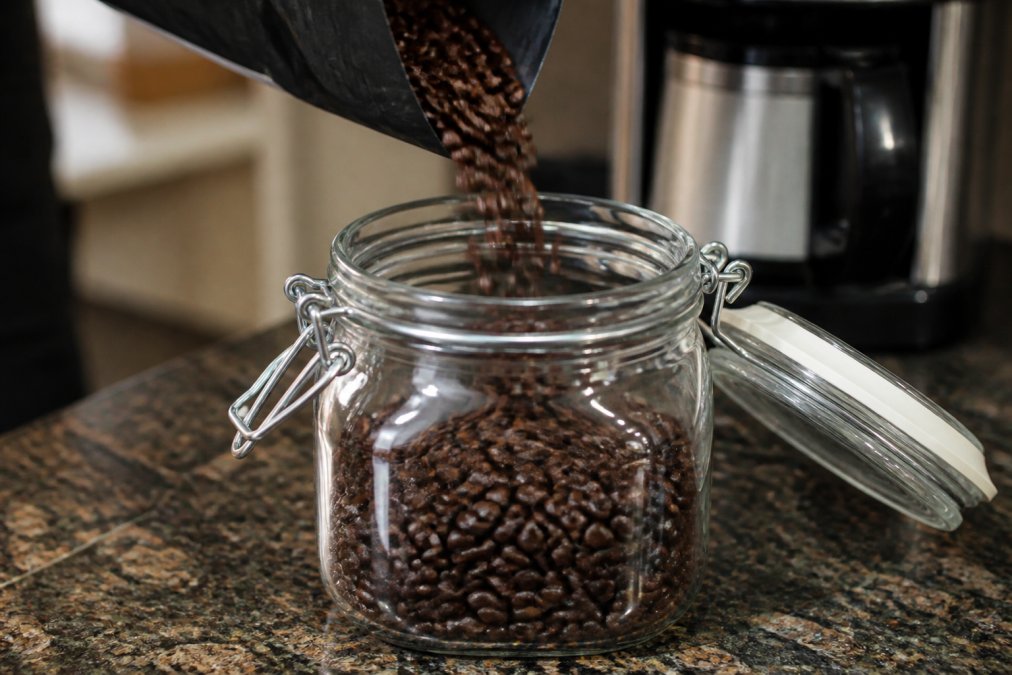
Look for containers with a one-way degassing valve if you're storing freshly roasted beans. These valves allow carbon dioxide (produced by the beans as they off-gas after roasting) to escape without letting oxygen back in. This is a critical feature in the first 2-4 weeks after roasting.
2. Keep Coffee Beans Away From Light, Heat, and Moisture
Three environmental factors destroy coffee freshness faster than anything else: UV light, heat, and humidity. Understanding how each damages your beans helps you choose the right storage location.
UV light breaks down chlorogenic acid and other compounds responsible for coffee's complexity. Direct sunlight or even fluorescent light exposure degrades flavor noticeably within days. Heat accelerates the staling process by speeding up oxidation and promoting rancidity in the coffee's natural oils. Moisture causes beans to absorb humidity, which alters their density and can introduce mold risk.
The ideal storage environment is cool, dark, and dry. A pantry away from the stove or sunlight works well. Avoid storing beans above appliances, near windows, or in humid kitchens. If your kitchen runs warm or humid, consider an alternative location entirely.
Temperature stability matters more than absolute coldness. Fluctuating temperatures cause condensation inside storage containers, introducing moisture. A consistent 60-70°F is better than a cold spot that warms and cools throughout the day.
How to Tell If Coffee Is Fresh
Freshness in coffee beans is determined by the roast date, not the purchase date. Coffee reaches peak flavor 5-14 days after roasting, depending on roast level. After that window, the beans don't spoil immediately, but their aromatic complexity fades progressively.
Check the roast date on the bag. If it's not printed, ask the roaster. Beans roasted more than 4 weeks ago have already lost much of their nuance. For espresso, freshness matters even more, stale beans produce thin shots with poor crema.
Visual and olfactory cues help identify freshness too. Fresh beans have a rich, glossy appearance with visible oils on the surface (especially for darker roasts). The aroma should be vibrant and complex when you open the container. Dull-looking beans with a flat, muted smell indicate oxidation has already progressed significantly.
3. Choose the Best Coffee Storage Canisters
Not all containers are equal when it comes to preserving freshness. The best coffee storage canisters combine airtight sealing, light blocking, and material durability.
Glass canisters with rubber gasket seals are the gold standard. They're opaque enough to block most light, don't absorb odors or oils, and create a reliable seal. Stainless steel containers work equally well and offer durability if you move your coffee frequently. Ceramic canisters are aesthetically appealing and provide excellent light blocking, though they're more fragile.
Avoid clear plastic containers, even if they seal well. Plastic degrades over time and can impart off-flavors to your beans. Paper bags with one-way valves work temporarily for short-term storage (under 2 weeks), but they're not designed for extended freshness preservation.
| Container Type | Light Blocking | Seal Quality | Best For | Durability |
|---|---|---|---|---|
| Glass with gasket | Excellent | Excellent | Long-term storage | High |
| Stainless steel | Excellent | Excellent | Frequent movement | Very High |
| Ceramic | Excellent | Good | Display + storage | Medium |
| Clear plastic | Poor | Fair | Temporary only | Low |
| Paper with valve | Fair | Poor | First 2 weeks only | Low |
The size of your canister matters too. A container that's too large leaves excess air space, increasing oxidation risk. Choose a size that fits your beans snugly, or fill larger containers with an air-displacement method: pour beans in, then place a piece of parchment paper on top before sealing to minimize headspace.
4. Freeze Coffee Beans for Long-Term Storage
Freezing extends the shelf life of coffee beans significantly, but only when done correctly. The challenge is managing moisture and temperature fluctuation.
Freezing slows oxidation and staling dramatically. Beans stored in the freezer at a stable temperature can maintain reasonable quality for 3-4 months, compared to 2-4 weeks at room temperature. This makes freezing valuable for people who buy in bulk or receive subscription shipments they can't use immediately.
The critical rule: freeze beans in an airtight container and never open it until you're ready to use them. Each time you open a frozen container, condensation forms as the beans warm. This moisture damages the beans and accelerates staling once they return to room temperature.
Divide your beans into smaller portions before freezing. Store one portion in your regular airtight container at room temperature for daily use, and keep the rest frozen in sealed bags or containers. This way, you only thaw what you need and avoid repeated temperature cycles.
Grind your beans while they're still frozen if possible. Cold beans grind more uniformly and lose fewer aromatics to the air during grinding. Let ground coffee come to room temperature before brewing to avoid introducing moisture into your brewer.
Coffee Bean Shelf Life and Peak Freshness Windows
Understanding the timeline of coffee freshness helps you plan storage and consumption strategically. The 5 best ways to store fresh coffee beans all aim to extend this window as long as possible.
Peak freshness for whole beans occurs 5-14 days after roasting. During this window, the beans are releasing carbon dioxide (degassing) and developing their full flavor complexity. This is the ideal time to brew them.
From day 15 to day 30, beans remain quite fresh but begin losing aromatic complexity. The flavor is still excellent for most brewing methods. After day 30, noticeable degradation becomes apparent to anyone paying attention. The cup quality flattens, acidity becomes less vibrant, and body thins.
Beyond 8 weeks, beans have lost enough volatile compounds that even careful storage can't restore their original character. They're not undrinkable, but they're noticeably stale compared to fresh beans.
These timelines assume proper storage in an airtight container away from light and heat. Improper storage can cut these windows in half. Conversely, freezing can extend usable freshness to 3-4 months.
5. Store by Roast Level for Optimal Flavor
Different roast levels have different degassing rates and flavor stability windows. Tailoring your storage approach to your roast level maximizes freshness.
Light roasts degas quickly and reach peak freshness faster than darker roasts, often within 3-5 days. They're also more delicate and lose their bright, nuanced flavors faster. Light roasts benefit from shorter storage windows and more aggressive freshness preservation (airtight container, cool location, minimal air exposure).
Medium roasts have a sweet spot around 7-10 days post-roast. They maintain their flavor profile longer than light roasts, typically staying excellent through day 30-35. Medium roasts are more forgiving of storage conditions.
Dark roasts degas more slowly and actually improve slightly over the first 10-14 days as oils migrate to the surface. They're more stable overall and can maintain acceptable quality for 6-8 weeks. Dark roasts are the most resistant to staling, so they're the best choice if you can't maintain ideal storage conditions.
Very dark roasts (French roast, espresso roasts) can sometimes taste better at 2-3 weeks post-roast than immediately after roasting. The extended degassing period allows flavors to mellow and develop complexity.
Store light roasts in smaller containers you'll use quickly. Medium roasts can handle standard airtight storage. Dark roasts are your best bet for bulk purchasing or longer-term storage.
Battle Ready Coffee offers single-origin options like their Peru Coffee Pods (medium roast) and Bali Coffee Pods (medium-dark roast), each with different optimal freshness windows. Pre-sealed capsules eliminate the storage variables entirely, guaranteeing peak freshness arrives at your door.

Conclusion
Storing fresh coffee beans properly transforms your daily cup from flat and stale to vibrant and complex. The fundamentals are simple: seal out oxygen, block light, control moisture, and match your storage approach to your roast level.
Battle Ready Coffee eliminates these variables entirely with pre-sealed single-serve capsules like the 12 Pack Single Serve Coffee Capsules and 60 Pack Single Serve Coffee Capsules, which arrive sealed with no oxygen inside. Since every order is roasted only after placement, you're guaranteed peak freshness without managing storage yourself. Get started with Battle Ready Coffee and experience the difference that truly fresh, ethically sourced beans make in your morning routine.


External Sources
According to the Specialty Coffee Association's research on coffee degradation, oxygen exposure and temperature fluctuation are the primary factors accelerating staling in roasted beans.
A study on coffee storage methods published in the Journal of Food Science found that airtight containers with one-way valves preserved volatile flavor compounds 40% longer than standard sealed containers without degassing capability.
Research from the National Coffee Association's consumer guide confirms that beans stored in cool, dark, airtight conditions maintain peak quality for 2-4 weeks, while improper storage can reduce this window to just 3-5 days.
Frequently Asked Questions
What is the best way to store fresh coffee beans to keep them fresh?
Store coffee beans in an airtight container away from light, heat, and moisture. Keep them in a cool, dry pantry or cabinet at room temperature, ideally between 60-70°F. Avoid the refrigerator unless you're storing beans long-term (beyond 3-4 weeks), and never store them near appliances that generate heat. Oxygen exposure causes oxidation and degassing, which degrades flavor quickly. Battle Ready Coffee's single-serve pods are sealed with no oxygen inside, ensuring freshness from roast to cup.
How long do coffee beans stay fresh after roasting?
Whole coffee beans maintain peak freshness for 2-4 weeks after the roast date, with optimal flavor during the first two weeks. After that, oxidation and CO2 loss gradually diminish aroma and cup quality. Ground coffee degrades faster, staying fresh for 1-2 weeks. Check the roast date on your bag, Battle Ready Coffee roasts beans only after your order is placed, guaranteeing maximum freshness. Store beans in an airtight container to extend this window and slow the staling process.
Is it better to store coffee beans in glass or stainless steel containers?
Both work well, but stainless steel offers better protection against light exposure and temperature fluctuations. Glass containers are excellent if stored in a dark cabinet, as they allow you to see bean condition without opening the seal repeatedly. The most important factor is an airtight seal that minimizes oxygen exposure and prevents moisture absorption. Avoid plastic, which can leach compounds and is more permeable to oxygen. Whichever material you choose, ensure it has a tight-fitting lid and is stored away from windows and direct sunlight.
Does freezing coffee beans actually keep them fresh longer?
Yes, freezing extends shelf life significantly, frozen beans can stay fresh for 3-6 months when stored properly. However, freezing works best for long-term storage (beyond 4 weeks). For short-term use, room-temperature storage in an airtight container is preferable because freezing and thawing cycles expose beans to moisture and temperature swings that damage flavor. If you freeze, use an airtight, moisture-proof container and thaw only what you'll use within a few days. Avoid repeated freeze-thaw cycles, which accelerate degradation.