

Table of Contents
- Why Proper Storage Matters for Whole Bean Coffee
- The Four Enemies of Coffee Freshness
- How to Tell If Your Coffee Is Fresh
- Best Coffee Storage Containers and Materials
- Step-by-Step Storage Process
- Can You Freeze Coffee Beans?
- Storage Methods Compared: Pantry vs. Freezer
- Conclusion
- Frequently Asked Questions
Last Updated: September 3, 2026
Why Proper Storage Matters for Whole Bean Coffee
The difference between coffee that tastes vibrant and coffee that tastes flat comes down to one thing: how you store it. Whole bean coffee is alive with volatile compounds that create aroma and flavor. The moment those beans leave the roaster, they begin to oxidize. Your job is to slow that process down.
At Battle Ready Coffee, we roast beans only after your order arrives, which means peak freshness starts the moment they ship. But that freshness window closes fast. Within two to four weeks, the flavor profile shifts noticeably. Within two months, most whole bean coffee has lost its complexity. This isn't a catastrophe, the coffee is still drinkable, but you're no longer tasting what the roaster intended.
Proper storage of whole bean coffee extends that window. It keeps the beans' oils intact, preserves the aroma, and maintains the sensory profile that separates a good cup from a mediocre one. The four enemies of freshness, heat, light, moisture, and oxygen, work constantly to degrade your beans. Understanding these threats and how to counter them means the difference between coffee that tastes like the roaster's craft and coffee that tastes like it's been sitting in a warehouse for months.
The Four Enemies of Coffee Freshness
Heat accelerates oxidation. When beans are exposed to warm temperatures, the chemical reactions that degrade flavor compounds happen faster. A pantry above the stove or a cabinet near a heating vent will age your coffee weeks ahead of schedule. Ideal ambient temperature for whole bean coffee storage sits between 55-75°F. Room temperature works, but cooler is better.
Light, especially sunlight, degrades the oils and volatile compounds in beans. UV exposure breaks down the molecular structure that creates flavor. This is why opaque containers matter so much, clear glass or transparent plastic canisters look nice on the counter, but they're actively harming your coffee every hour it sits there. You want a container that blocks light completely.
Moisture is a silent killer. When beans absorb humidity from the air, they swell and lose density. This changes how they grind and how they extract during brewing. Worse, moisture can trigger mold growth if conditions are right. The freezer introduces another moisture problem: condensation. When cold beans warm up, water droplets form on the surface. This is why the thaw protocol matters if you freeze beans.
Oxygen is the fundamental enemy. Oxidation happens naturally over time, but exposure to air accelerates it dramatically. This is where one-way degassing valves come in. These small vents let carbon dioxide escape from freshly roasted beans without letting oxygen back in. Once beans have finished degassing (usually 5-7 days after roasting), that valve becomes less critical, but an airtight seal still matters for slowing oxygen ingress.
How to Tell If Your Coffee Is Fresh
The roast date is your primary indicator. Look for a printed or stamped date on the bag. This tells you exactly when the beans were roasted. Coffee is at peak flavor between 5-30 days after roasting. Before day 5, the beans are still off-gassing aggressively and may taste sharp. After day 30, the flavor begins to flatten noticeably. After 60 days, most beans have lost significant complexity.
Aroma is your second indicator. Open the bag and smell the beans. Fresh whole bean coffee has a rich, complex smell, you can often pick out individual notes like chocolate, fruit, or nuts depending on the roast. Stale beans smell muted or flat. If you can barely smell anything, the beans have lost their volatile compounds.
Appearance matters too, though less than people think. Fresh beans have a slight sheen from oils on the surface (especially in medium and dark roasts). Very dull, dry-looking beans have likely been stored poorly or aged significantly. However, some roasts are naturally less oily than others, so appearance alone isn't definitive.
The real test comes during brewing. Fresh coffee extracts more evenly and produces a richer crema. The flavor is layered and nuanced. Stale coffee produces thin crema, brews quickly, and tastes one-dimensional. If your usual brew suddenly tastes flat, your storage conditions or bean age is likely the culprit.
Best Coffee Storage Containers and Materials
The ideal container for whole bean coffee is airtight, opaque, and made from material that doesn't interact with the beans. Stainless steel is the gold standard. It blocks light completely, doesn't absorb odors, and maintains a neutral environment. Glass containers work only if they're tinted or opaque, clear glass defeats the purpose. Ceramic can work if it's glazed and has a tight seal. Avoid plastic unless it's food-grade and completely opaque, as some plastics leach chemicals over time and many are permeable to oxygen.
Size matters more than most people realize. A container that's too large means more air space above the beans. Every time you open it, you introduce fresh oxygen. A container that's too small creates pressure that can force beans against the lid, damaging them. The sweet spot is a container that's about 80% full when you add your beans.
One-way degassing valves are useful for freshly roasted beans but unnecessary once they've finished off-gassing. These valves let carbon dioxide escape without letting oxygen back in. They're common on commercial coffee bags because roasters need to package beans while they're still actively degassing. For home storage in an airtight container without a valve, this isn't a concern, the seal itself does the job.
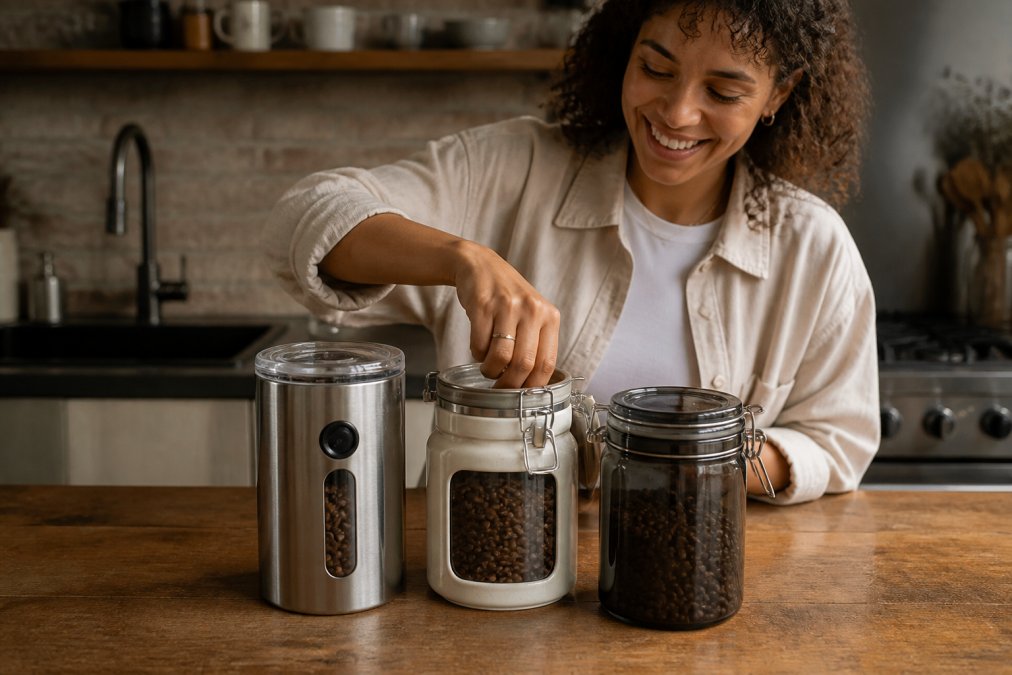
Vacuum-sealed containers are excellent for long-term storage. They remove oxygen from the equation entirely. If you're storing beans for more than a month, a vacuum seal extends freshness significantly. The trade-off is that you can't easily access beans without breaking the seal. For weekly use, a standard airtight container is more practical.
Avoid paper bags, even if they have a valve. Paper is porous and doesn't provide an effective oxygen barrier. Some people transfer beans to paper bags for aesthetic reasons, but this actively degrades freshness. The original bag from the roaster (if it has a valve and seal) is designed for this purpose. Once you open it, transfer to a proper airtight container.
Step-by-Step Storage Process
Step 1: Check the Roast Date
Before you store anything, verify the roast date on your beans. This is printed on the bag from Battle Ready Coffee and most quality roasters. Note the date. If the beans are already more than 10 days old when they arrive, storage won't restore lost freshness, it will only slow further degradation.
Step 2: Choose Your Container
Select an airtight, opaque container appropriate for your usage pattern. If you go through a pound per week, a one-liter stainless steel container works well. If you use less, go smaller to minimize air space. Make sure the seal is tight. Test it by closing the container and trying to pull the lid off, it should require real effort.
Step 3: Store in the Right Location
Place your container in a cool, dark spot. A pantry away from heat sources is ideal. The back of a kitchen cabinet works. Avoid:
- Above or near the stove
- On windowsills
- Near radiators or vents
- In direct sunlight
- Above the refrigerator (warm air rises there)
Temperature stability matters more than cold. A consistently cool pantry at 65°F is better than a freezer you open and close daily.
Step 4: Monitor and Use Within Peak Window
Check your beans weekly. Open the container, smell them, and assess aroma. Use them within 2-4 weeks of the roast date for peak flavor. After 4 weeks, the coffee is still good, but the flavor complexity begins dropping noticeably. This is when most people start noticing their coffee tastes "off."
Can You Freeze Coffee Beans?
Yes, you can freeze whole bean coffee, and it's a legitimate strategy for long-term storage. Freezing slows oxidation to a near-standstill. Beans stored in a freezer can maintain reasonable flavor for 3-6 months, compared to 2-4 weeks at room temperature.
The critical detail is the thaw protocol. When frozen beans warm up, condensation forms on the surface. This moisture damages the beans and can introduce mold if not handled carefully. Here's how to avoid it:
Freeze beans in small portions, not the entire bag at once. Use vacuum-sealed bags or airtight containers. Remove only the portion you need for the week ahead. Let the beans come to room temperature inside the sealed container before opening it. This takes about 30 minutes. Only then open the container and transfer beans to your brewing container. Never return thawed beans to the freezer.
The science behind this: frozen beans are denser and less porous than room-temperature beans. When they warm, the air inside them warms faster than the surface, creating pressure that draws moisture inward rather than outward. The sealed container keeps that moisture from escaping and condensing on the surface. Once you've thawed beans, they've absorbed that internal moisture and should be used within a few days.
Storage Methods Compared: Pantry vs. Freezer
| Storage Method | Shelf Life | Flavor Retention | Best For | Practical Considerations |
|---|---|---|---|---|
| Pantry (airtight, cool) | 2-4 weeks | Excellent | Regular weekly use | Requires consistent cool conditions |
| Pantry (standard container) | 1-2 weeks | Good | Frequent use | Faster oxidation with more air exposure |
| Freezer (vacuum-sealed) | 3-6 months | Good to fair | Bulk storage, occasional use | Requires thaw protocol; condensation risk if mishandled |
| Freezer (standard container) | 2-3 months | Fair | Long-term backup | Higher condensation risk; flavor degrades faster |
| Refrigerator | 3-4 weeks | Fair | Not recommended | Temperature fluctuations and moisture are problematic |
Pantry storage is best for most people. It's simple, requires no special protocol, and keeps beans at peak flavor. The tradeoff is a shorter window, you need to use beans within 2-4 weeks.
Freezer storage makes sense if you buy in bulk, prefer less frequent shopping, or want to stockpile beans from limited roasts. The tradeoff is that flavor quality drops slightly compared to fresh pantry storage, and you must follow the thaw protocol precisely.
Refrigerator storage is generally not recommended. The temperature fluctuations as you open and close the door, combined with ambient humidity, create conditions that accelerate degradation. A pantry is almost always better.
Conclusion
Storing whole bean coffee properly is straightforward once you understand what your beans need: an airtight, opaque container in a cool, dark place. The difference between coffee stored this way and coffee left on the counter is dramatic. You'll taste more complexity, better aroma, and richer flavor for weeks longer.
Battle Ready Coffee arrives roasted to order, which gives you the freshest possible starting point. The storage habits you build from that moment determine whether you're tasting the roaster's craft or a shadow of it. Use an airtight container, keep it cool and dark, and consume your beans within 2-4 weeks of the roast date. When you do, you'll notice the difference immediately.
Ready to experience peak freshness? Battle Ready Coffee delivers freshly roasted whole beans designed to stay vibrant in your cup. Find your roast and taste the difference proper storage makes.
Frequently Asked Questions
How long does a bag of whole bean coffee stay fresh?
Whole bean coffee reaches peak flavor within 2-4 weeks of the roast date. After 4 weeks, the beans begin to lose their aromatic compounds and volatile oils that create that rich sensory profile. You can still brew acceptable coffee for up to 8 weeks, but the brightness and complexity fade. Battle Ready Coffee roasts your beans only after you order, so your bag arrives at peak freshness, check the roast date on your package to track when your window begins.
Does freezing whole bean coffee keep it fresh longer?
Freezing can extend storage life if done correctly, but it introduces risks. When frozen beans thaw, condensation forms on the surface, causing rapid oxidation and stale flavors. To freeze successfully, use airtight, opaque containers with minimal headspace, and thaw at room temperature without opening the bag. Freezing works best for long-term storage beyond 8 weeks, but pantry storage in an airtight container keeps beans fresher during the peak flavor window of 2-4 weeks.
What is the best container for storing coffee beans?
The ideal container is airtight, opaque, and made of glass, ceramic, or stainless steel, never clear plastic or glass. One-way degassing valves allow carbon dioxide to escape without letting oxygen in, preserving the beans' aromatic compounds. Avoid containers that let light penetrate, as light exposure degrades the oils and accelerates staling. Vacuum-sealed bags with degassing valves work well too. Size matters: choose containers that minimize headspace to reduce oxygen exposure.
Should I store coffee beans in the refrigerator?
Avoid the refrigerator. Coffee beans absorb moisture and odors from the fridge environment, which damages their flavor profile and bean integrity. The temperature fluctuations when you open and close the door cause condensation, leading to freezer burn and rapid oxidation. A cool, dark pantry or cupboard at 60-70°F is far better. Reserve the freezer only for long-term storage beyond your peak flavor window, and use proper thawing protocols to prevent moisture damage.